Introduction
Your first Sahyadri trek is a day you'll remember for years. The green ridges, the first summit view, the feeling of doing something new with your own two legs. Knowing the common safety mistakes first-time Sahyadri trekkers make is the easiest way to make sure that memory is a good one.
Here's the reassuring truth: almost every beginner slip-up is small, predictable, and completely avoidable. New trekkers rarely get into trouble because the hills are dangerous. They get caught out by simple things like starting late, wearing the wrong shoes, or skipping a weather check.
This guide walks through the mistakes that trip up first-timers most often, and the easy fixes for each. Read it before your first trek and you'll head out with the confidence of someone who's done it many times before.
Table of Contents
- Why Beginners Get Caught Out
- Mistake 1: Starting the Trek Too Late
- Mistake 2: Wearing the Wrong Footwear
- Mistake 3: Carrying Too Little Water and Food
- Mistake 4: Ignoring the Weather
- Mistake 5: Risky Selfies and Photos
- Mistake 6: Overestimating Fitness and Pace
- Mistake 7: Poor Planning and No Backup
- Mistake 8: Straying From the Group or Trail
- The First-Timer's Quick Safety Checklist
- Practical Tips
- Common Mistakes at a Glance
- Expert Insights
- Frequently Asked Questions
- Ready for Your Next Adventure?
Why Beginners Get Caught Out
Most first-trek problems don't come from bad luck. They come from not knowing what you don't know yet. A seasoned trekker packs certain things and makes certain decisions on autopilot, habits built over dozens of treks.
A beginner hasn't built those habits. So a first-timer might not realize that a 9 AM start puts them on an exposed climb at the hottest hour, or that everyday sneakers turn treacherous on wet rock. None of this is a knock on beginners. It's just the learning curve.
The fastest way up that curve is to learn from others' mistakes instead of your own. That, and trekking your first few routes with an experienced group, means you absorb good habits without the hard lessons.
Mistake 1: Starting the Trek Too Late
This is the single most common beginner error, and it sets off a chain of problems.
A late start means climbing during the hottest part of the day, running low on time, and risking a descent in fading light. Nearly every "we got stuck on the mountain after dark" story starts with leaving too late.
The fix:
- Start early, ideally at first light. Sahyadri treks are built around dawn starts for good reason.
- Work backward from sunset. Plan to be safely down with daylight to spare.
- Add a buffer for slow sections, rests, and photo stops.
An early start gives you cooler air, softer light, thinner crowds, and a huge margin of time. It's the easiest upgrade a beginner can make.
Mistake 2: Wearing the Wrong Footwear
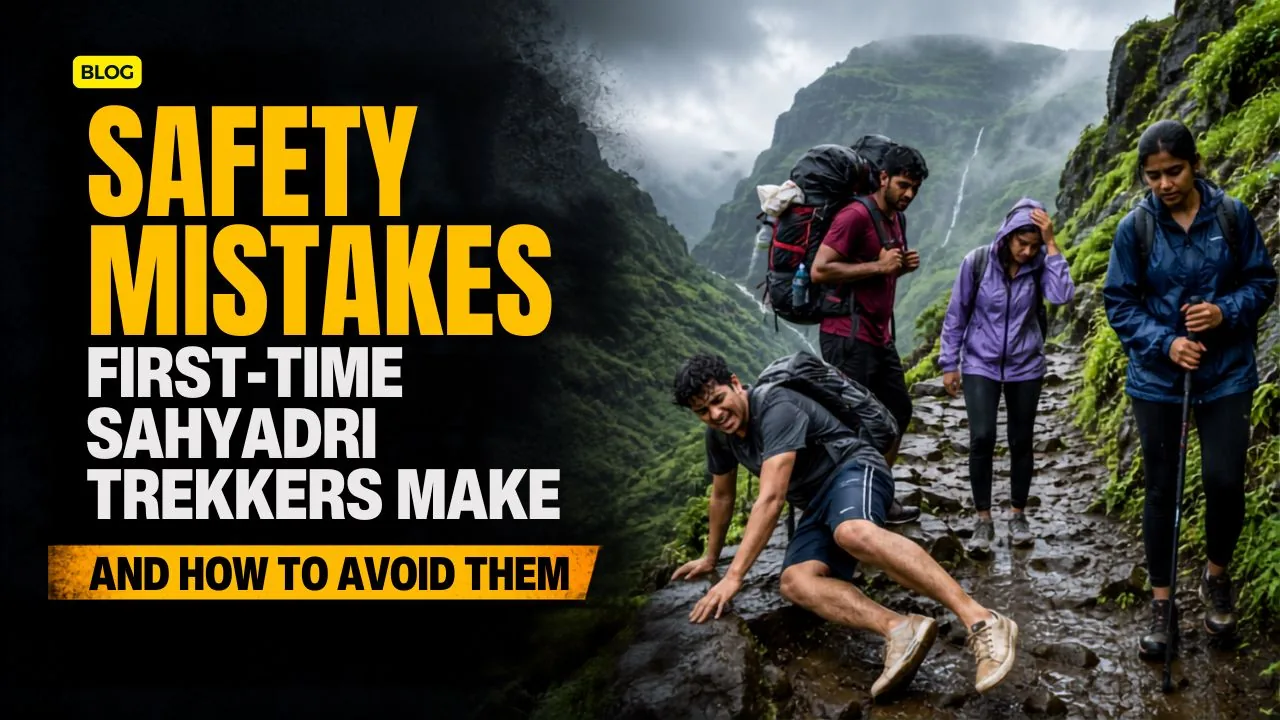
New trekkers often show up in fashion sneakers, worn-out shoes, or even sandals. On dry, flat ground that's fine. On the Sahyadri's wet rock, loose scree, and stone steps, it's the top cause of slips and turned ankles.
The fix:
- Wear trekking shoes with deep-lugged, grippy soles. Grip is everything on Sahyadri terrain.
- Break them in on short walks before your trek, never debut brand-new shoes on the big day.
- Skip cotton socks in favor of synthetic or wool-blend ones to avoid blisters.
Good footwear turns slippery, rocky trails from a worry into something you barely think about. If you buy one piece of trekking gear before your first trek, make it shoes.
Mistake 3: Carrying Too Little Water and Food
Beginners often underestimate how much water a climb demands, or assume they'll find it on the trail. Many Sahyadri streams run dry outside monsoon, and dehydration creeps up fast.
The fix:
- Carry 2 to 3 liters of water per person for a standard day trek, more in summer.
- Pack ORS or electrolytes to replace the salts you lose through sweat.
- Bring high-energy snacks: nuts, dry fruit, chikki, glucose, or a sandwich.
- Don't rely on unconfirmed water sources on the trail.
Running out of water or energy halfway up turns a fun climb into a miserable slog. A little extra weight in your bag is always worth it.
Mistake 4: Ignoring the Weather
Skipping the forecast is a classic first-timer mistake. The Sahyadri makes its own weather, and conditions on the hills can differ sharply from the city you left.
The fix:
- Check the forecast for the trek location, not your home city, the evening before and the morning of.
- Look at IMD alerts during monsoon; orange or red means reschedule.
- Pack for the actual conditions: rain layer for monsoon, warm layer for winter dawns, sun protection for summer.
A ten-minute weather check shapes what you pack, when you start, and whether today's the day at all. Experienced groups treat it as a non-negotiable ritual, and so should you.
Mistake 5: Risky Selfies and Photos
The view from a Sahyadri summit is stunning, and the urge to capture it is strong. Unfortunately, chasing the perfect shot near cliff edges is behind a real share of avoidable accidents.
The fix:
- Keep a safe distance from edges, especially on wet or windy days.
- Never step backward for a photo without looking, and never climb on fragile walls or bastions.
- Take photos from stable ground. The best views come from safe vantage points anyway.
- Watch your footing, not your phone, while moving.
No photo is worth a fall. Enjoy the view, get your shot from solid ground, and keep both feet planted.
Mistake 6: Overestimating Fitness and Pace
Excited beginners often charge uphill fast, burn out early, then struggle for the rest of the climb. Others pick a trek that's simply too hard for a first outing.
The fix:
- Choose an easy-to-moderate trek for your first time. Save the famous hard climbs for later.
- Set a steady, sustainable pace you can hold, rather than sprinting and stopping.
- Rest before you're exhausted, in short breaks rather than long collapses.
- Be honest about your fitness and build up over a few treks.
Trekking isn't a race. A slow, steady rhythm gets you to the top fresher and happier than a fast burnout ever will. Popular first-timer climbs like Kalsubai are longer than they look, so pace yourself.
Mistake 7: Poor Planning and No Backup
Some first-timers head out with no real plan: no route knowledge, no idea of the return transport, nobody at home who knows where they are.
The fix:
- Research the route or go with someone who knows it.
- Tell someone at home your plan and expected return time.
- Carry a charged phone and a power bank, plus a basic first aid kit.
- Know your return transport and its last timings, especially with public buses.
A little planning removes almost all the stress. You spend the day enjoying the trek instead of worrying about the logistics.
Mistake 8: Straying From the Group or Trail
Wandering off to explore, racing ahead, or lagging far behind is how beginners get lost or hurt away from help. Fog and unmarked plateaus make it even easier to drift off-route.
The fix:
- Stay with your group and within sight of the person ahead and behind.
- Follow the marked trail rather than shortcuts.
- Don't rush ahead of the leader or fall far behind.
- Speak up early if you're struggling, rather than quietly dropping back.
Sticking together is one of the simplest safety habits there is, and it makes the whole trek more fun too.
The First-Timer's Quick Safety Checklist
Before your first Sahyadri trek, run through this:
- [ ] Grippy trekking shoes, broken in
- [ ] 2 to 3 liters of water plus electrolytes
- [ ] High-energy snacks
- [ ] Weather checked for the trek location
- [ ] Early start planned, with a daylight buffer
- [ ] Rain layer or warm layer as the season needs
- [ ] Charged phone and power bank
- [ ] Basic first aid kit and any personal medication
- [ ] ID and some cash
- [ ] Someone at home knows your plan
- [ ] An easy-to-moderate route for the first time
Tick all of these and you're better prepared than most first-timers on the trail. For the full version, work through our Sahyadri trekking safety checklist for beginners.
Practical Tips
- Pick an easy, popular trek for your first outing.
- Start early and finish with daylight to spare.
- Invest in grippy footwear above all other gear.
- Carry more water than you think you need.
- Check the weather the night before and the morning of.
- Keep phones away from cliff edges and take photos from safe ground.
- Set a slow, steady pace and rest before you're wiped out.
- Go with an experienced group for your first few treks to learn good habits fast.
Common Mistakes at a Glance
| Mistake | Why It's Risky | The Fix |
|---|---|---|
| Late start | Heat, time pressure, dark descent | Start at first light |
| Wrong footwear | Slips and sprains on wet rock | Grippy, broken-in trek shoes |
| Too little water | Dehydration and fatigue | 2-3 liters plus electrolytes |
| Ignoring weather | Caught out by rain or storms | Check the forecast and alerts |
| Risky selfies | Falls near edges | Shoot from stable ground |
| Overestimating fitness | Burnout, injury | Easy route, steady pace |
| No plan or backup | Lost, no help available | Research, inform someone, carry a kit |
| Straying from group | Getting lost or hurt alone | Stay together on the trail |
Expert Insights
Trek leaders who guide beginners every weekend say the same thing: first-timers rarely lack courage, they lack the small habits that keep experienced trekkers safe. The good news is those habits transfer fast.
They also point out that the mistakes cluster at the start of the day. A late start, the wrong shoes, and a skipped weather check are decisions made before anyone leaves home, and they shape everything that follows. Fix the morning and most of the day takes care of itself.
Their strongest advice for beginners is simple: do your first few treks with an experienced group. You'll pick up pacing, packing, and trail sense by watching people who've done it hundreds of times, and you'll build confidence without learning the hard lessons alone. It's the fastest, safest way to fall in love with trekking.
Frequently Asked Questions
1. What is the most common mistake beginner trekkers make? Starting the trek too late. A late start leads to climbing in peak heat, rushing, and risking a descent after dark. Starting at first light with a daylight buffer prevents a whole chain of problems.
2. What shoes should a first-time trekker wear? Trekking shoes with deep-lugged, grippy soles, broken in on short walks beforehand. Everyday sneakers and sandals slip on the Sahyadri's wet rock and stone steps, causing most beginner slips and sprains.
3. How much water should I carry on my first trek? Carry 2 to 3 liters per person for a standard day trek, and more in summer. Add ORS or electrolytes, and don't count on finding water on the trail, since many Sahyadri streams run dry.
4. Which trek is best for a first-timer in the Sahyadri? Choose an easy-to-moderate, popular trek with a clear trail rather than a famous hard climb. Building up over a few treks lets your fitness and trail sense grow safely.
5. Do I need to check the weather before a short trek? Yes. The Sahyadri makes its own weather, and conditions on the hills differ from the city. Check the forecast for the trek location and any IMD alerts the night before and the morning of.
6. Is it safe to take photos at the summit? Yes, from stable ground well back from edges. Most avoidable fort and cliff accidents come from risky selfies near drops, so keep your footing and never step backward for a shot.
7. Should beginners trek alone? It's best not to. New trekkers learn pacing, packing, and trail sense far faster and more safely by going with an experienced group for their first few treks.
The safety mistakes first-time Sahyadri trekkers make are almost all small and easy to avoid: start early, wear grippy shoes, carry enough water, check the weather, keep away from edges, pace yourself, plan ahead, and stay with your group. Master those and your first trek becomes exactly what it should be, a joyful, confident adventure.
Every experienced trekker was a beginner once. Learn these lessons the easy way, from a guide instead of a stumble, and the Sahyadri will welcome you back trek after trek.
Ready for Your Next Adventure?
Don't just read about it — come experience it. Book your spot on Sahyadri Treks with certified trek leaders, small groups, and everything organised for you.
🏷 common trekking mistakes beginners, first trek safety tips Sahyadri, beginner trekking errors, how to prepare for a first trek, Sahyadri trekking for beginners, what mistakes do beginner trekkers make
Be the first to comment on this post.