Introduction
Some treks are about the summit. The Naneghat trek is about the journey, a walk along a genuine 2,000-year-old trade route where merchants and caravans once climbed these very stone steps. Add ancient caves, historic inscriptions, and a waterfall that appears to defy gravity, and you have one of the most fascinating treks in the Sahyadri.
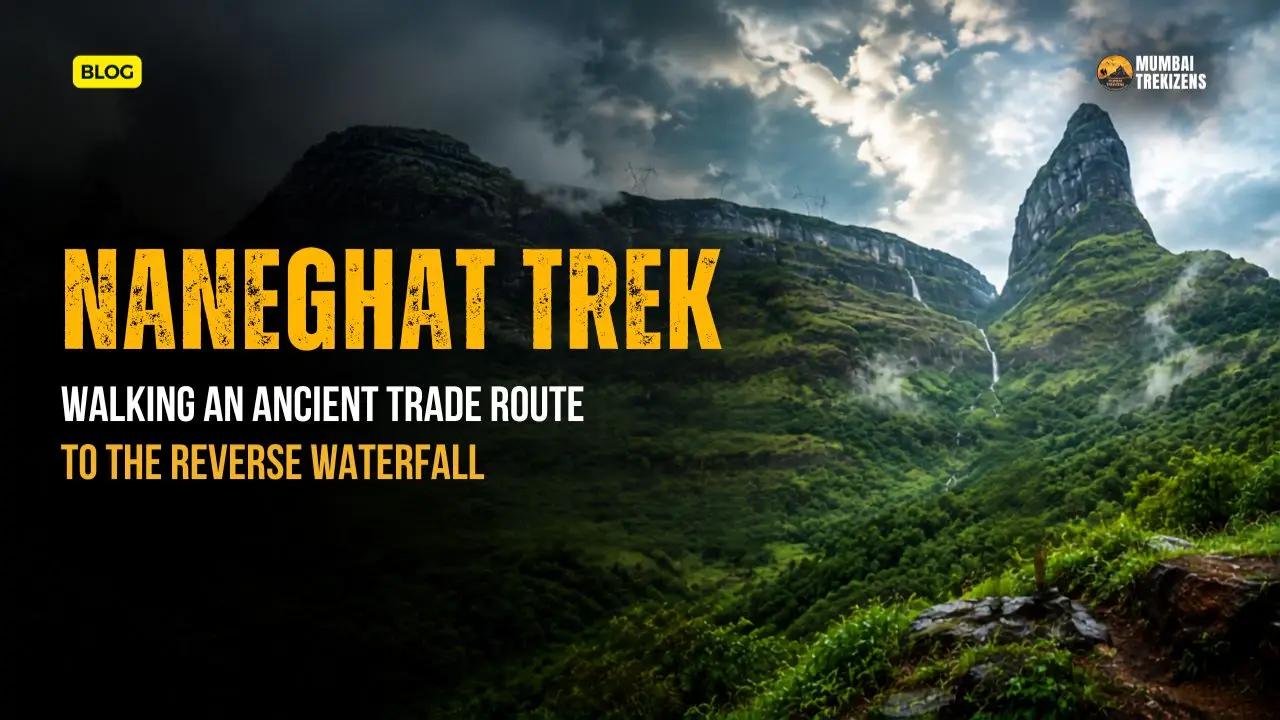
Naneghat is an ancient mountain pass near Junnar, connecting the Konkan coast with the Deccan plateau. During monsoon, it's famous for its reverse waterfall, where wind pushes falling water back up the cliff. That spectacle, along with its rich history and rolling plateau views, makes Naneghat a beloved monsoon outing.
This guide covers the route, the Satavahana-era caves, the reverse waterfall, the history, road access, difficulty, food, and nearby places, everything you need to plan this trek through living history.
Table of Contents
- Where Naneghat Is Located
- The History of the Ancient Trade Route
- The Satavahana Caves and Inscriptions
- The Famous Reverse Waterfall
- The Trek Route
- Difficulty Level and Who It Suits
- Road Access: The Two Ways to Experience Naneghat
- How to Reach Naneghat
- Best Time to Visit
- Food, Water, and Facilities
- Nearby Places
- Safety Tips
- Practical Tips
- Common Mistakes
- Expert Insights
- Frequently Asked Questions
- Ready for Your Next Adventure?
Where Naneghat Is Located
Naneghat is an ancient mountain pass in the Western Ghats near Junnar, in Pune district, close to the Ghatghar region near Malshej Ghat. It sits at around 2,600 feet and connects the Konkan lowlands with the Deccan plateau.
The name "Naneghat" comes from "nane" (coin) and "ghat" (pass), because it served as a toll-collection point on the old trade route. A large stone pot at the pass is said to have been used to collect these tolls, a wonderful physical link to its history.
Its location on the edge of the plateau gives Naneghat sweeping valley views and, in monsoon, a dramatic misty atmosphere that draws trekkers from Mumbai and Pune alike.
The History of the Ancient Trade Route
Naneghat's real magic is its history. During the Satavahana dynasty (around the 1st century BCE), this pass was a vital trade route linking the port towns of the Konkan coast with the inland market town of Junnar and the Deccan.
Merchants, traders, and caravans hauled goods up and down this route, and it functioned as a toll gate where taxes were collected, hence the name. Walking the old stone-paved steps, you're literally following in the footsteps of traders from two thousand years ago.
This deep antiquity is what sets Naneghat apart. It's not just a scenic trek; it's a walk through one of the oldest known trade corridors of the region, still carrying the marks of the people who built and used it.
The Satavahana Caves and Inscriptions
At the top of the pass lie ancient rock-cut caves dating to the Satavahana era. These caves once served as resting points for traders and travelers making the long climb.
The caves are famous for their Brahmi inscriptions, among the important early inscriptions in India, offering glimpses into the language, rulers, and life of the Satavahana period. There are also carvings and the remains of what was once a significant site.
For history lovers, sitting in these caves, sheltered from the wind and rain just as ancient travelers once were, is a genuinely moving experience. It's a rare trek where the human story is as compelling as the natural scenery. These 2,000-year-old inscriptions are irreplaceable, so please follow the basics of responsible trekking at historic forts.
The Famous Reverse Waterfall
Naneghat's headline monsoon attraction is its reverse waterfall. During suitable conditions, strong winds sweeping up the cliff catch the falling water and spray, blowing it back upward so the waterfall appears to flow up instead of down.
What to know about the reverse waterfall:
- It happens in monsoon, when there's both water flowing and strong updraft wind.
- The effect depends on rainfall and wind, so it can't be guaranteed on any given day.
- When it happens, it's a mesmerizing, almost magical sight.
- The same winds that create it can make the cliff edge area gusty, so care is needed.
Because the phenomenon isn't guaranteed, it's best to go for the whole experience, the history, the caves, the plateau views, and treat the reverse waterfall as a spectacular bonus if conditions align.
The Trek Route
Naneghat is a moderate trek of roughly 4 to 7 km, depending on the route and how it's measured, typically taking 4 to 5 hours for the full experience.
What the route offers:
- Stone-paved ancient steps at the start, part of the original trade route, a gradual climb.
- Forest paths and rocky sections as you ascend.
- Open plateau near the top with panoramic valley views.
- The caves and the pass at the summit, plus the reverse waterfall area in monsoon.
The trek "gently builds in intensity," offering a bit of everything: history, forest, rock, and open views. The ancient stone steps are a highlight, worn smooth by centuries of use and a tangible connection to the past. The plateau can get disorienting in mist, so our navigation tips for Sahyadri fort treks help you stay on track.
Difficulty Level and Who It Suits
The Naneghat trek is rated moderate. It's not technical, but the climb, distance, and monsoon slipperiness make it a real outing.
- Suitable for: trekkers with basic to moderate fitness, including motivated beginners and families comfortable with a few hours of walking.
- Needs care: slippery stone steps and rocks in monsoon, and the gusty cliff-edge area near the reverse waterfall.
- Great for: history lovers, monsoon trekkers, and those who enjoy a scenic, story-rich walk.
The ancient steps make the ascent manageable, and there's no scrambling or exposure on the main route. It's one of the more accessible historic treks in the region, which is part of its wide appeal.
Road Access: The Two Ways to Experience Naneghat
An interesting feature of Naneghat is that you can also reach the top by road, via the plateau side. This gives visitors two very different experiences.
- The trek (from the base near Malshej/Vaishakhare): the classic, rewarding way, climbing the ancient stone steps through forest to the pass.
- By road (from the Junnar/plateau side): a drive up for those who want the caves, views, and reverse waterfall without the full climb, popular with families and casual visitors.
Which to choose? Trekkers and history lovers should absolutely do the climb for the full experience of the ancient route. Those short on time or with young children or elders may prefer the road access. Knowing both options exist helps you plan the right trip for your group.
How to Reach Naneghat
To the Trek Base
- The trek base is near the Vaishakhare village / Malshej Ghat area. From Junnar, hire a local vehicle to the base village (roughly 15 km).
From Mumbai
- The nearest railhead is Kalyan; from there take a bus or cab toward Junnar/Malshej, then to the base (roughly 4 to 5 hours total).
From Pune
- Drive toward Junnar and onward to the Naneghat base or plateau side (roughly 3.5 to 4.5 hours).
By Road to the Top
- The plateau/Junnar side road leads up to the pass for those not trekking.
Note: Confirm whether you want the trekking base (Malshej side) or the road-access plateau side, as they're different approaches. For the trek, arrange local transport to the base village and confirm return timing, especially in monsoon.
Best Time to Visit
- Monsoon (June to September): The most popular and dramatic season. Lush green plateau, misty atmosphere, flowing waterfalls, and the chance to see the reverse waterfall. Stone steps get slippery, so care is essential.
- Post-monsoon (October to November): Green and pleasant, with comfortable weather and clearer views, though the reverse waterfall fades as the rains end.
- Winter (December to February): Cool and clear, great for the history and views, with safe, dry footing.
- Summer (March to May): Hot and dry; the plateau is exposed, so start early and carry water.
Monsoon is the headline experience for the reverse waterfall and green drama, while winter offers the most comfortable conditions for enjoying the history and views.
Food, Water, and Facilities
Food and water: During monsoon and on weekends, there are usually small stalls near the top and base selling tea, snacks, bhajji, and lemon water, a welcome treat after the climb. Availability drops off-season, so carry your own water (2 liters) and snacks.
Facilities: Naneghat is a historic pass, not a developed tourist complex. Facilities are basic. Come prepared, respect the ancient caves and inscriptions (don't touch or deface them), and carry out all your trash.
The hot tea and bhajji at the misty top after climbing an ancient trade route is a simple pleasure that many trekkers treasure.
Nearby Places
Naneghat sits in a region rich with attractions, easy to combine into a fuller trip:
- Malshej Ghat: A famously scenic ghat with monsoon waterfalls and flamingo-season birdwatching nearby.
- Junnar and the Lenyadri Caves: Ancient Buddhist caves, and Lenyadri is home to one of the Ashtavinayak Ganpati temples.
- Shivneri Fort: The birthplace of Chhatrapati Shivaji Maharaj, near Junnar, a must-visit for history lovers.
- Jivdhan Fort: A neighboring fort often combined with Naneghat by experienced trekkers.
This cluster of history and scenery makes the Junnar-Malshej area a rewarding weekend base, with Naneghat as a highlight.
Safety Tips
- Wear trekking shoes with good grip; the ancient stone steps get slippery in monsoon.
- Be cautious near the cliff edge at the reverse waterfall, where winds are gusty.
- Take the climb steadily in wet, misty conditions.
- Carry 2 liters of water and snacks, as stalls are seasonal.
- Start early to enjoy the views and descend in good light.
- Check the weather and be careful on exposed plateau areas in thunderstorms.
- Respect the caves and inscriptions; never touch or deface them.
- Carry out all trash to protect this ancient heritage site.
In busy monsoon conditions, going with an organized group brings order to the crowds, safe pacing on slippery steps, and someone who can share the site's fascinating history.
Practical Tips
- Go in monsoon for the reverse waterfall, but treat it as a bonus, not a guarantee.
- Do the trek, not the drive, for the full ancient-route experience.
- Combine with Shivneri Fort or Lenyadri Caves for a history-rich weekend.
- Carry cash for the base village and stalls.
- Spend time in the caves and read about the inscriptions.
- Quick-dry clothing beats cotton in monsoon.
- Pack a rain layer for the misty, wet plateau.
- Leave no trace at this precious heritage site.
Common Mistakes
- Going only for the reverse waterfall and being disappointed when conditions don't align.
- Wearing poor-grip shoes on slippery ancient steps.
- Standing too close to the gusty cliff edge at the waterfall.
- Touching or defacing the ancient inscriptions and caves.
- Not carrying water, relying on seasonal stalls.
- Starting late and rushing the descent.
- Ignoring the history, treating a 2,000-year-old trade route as just a viewpoint.
- Littering at a heritage site.
Expert Insights
Trek leaders love Naneghat because it's a trek that tells a story. Few places let you physically walk an ancient trade route, rest in caves where merchants once sheltered, and read inscriptions two thousand years old. Leaders who share this history transform the climb from a walk into a journey through time.
They're realistic about the reverse waterfall. It's a magical phenomenon, but it depends on the right combination of rain and wind, so it can't be promised. Their advice is to come for the whole experience, the route, the caves, the plateau views, so the trip is a success regardless, with the reverse waterfall as a thrilling bonus when it appears.
Their practical tip is about monsoon crowds and slippery steps. Naneghat is hugely popular in the rains, and the ancient stone steps get slick. A steady pace, good shoes, and (ideally) an organized group make the experience smooth and safe, letting you focus on the history and beauty rather than jostling and footing.
Frequently Asked Questions
1. What is the Naneghat trek famous for? Naneghat is famous for being an ancient 2,000-year-old Satavahana trade route with rock-cut caves and Brahmi inscriptions, plus its monsoon reverse waterfall, where wind blows falling water back up the cliff.
2. How difficult is the Naneghat trek? It's rated moderate, a roughly 4 to 7 km trek taking 4 to 5 hours, with ancient stone steps, forest, and open plateau. It's not technical, but monsoon makes the steps slippery. Motivated beginners can manage it.
3. What is the reverse waterfall at Naneghat? During monsoon, strong updraft winds catch a waterfall's falling water and spray, blowing it upward so it appears to flow up the cliff. The effect depends on rainfall and wind, so it isn't guaranteed on every visit.
4. Can you reach Naneghat by road? Yes. Besides the trek from the Malshej side, you can drive to the top via the Junnar/plateau side. The trek is the classic experience, while road access suits families, elders, or those short on time.
5. How do I reach Naneghat? From Mumbai, reach Kalyan, then take a bus or cab toward Junnar/Malshej and on to the base. From Pune, drive toward Junnar (about 3.5 to 4.5 hours). Local transport covers the last stretch to the base village.
6. What is the best time for the Naneghat trek? Monsoon (June to September) is most popular for greenery and the reverse waterfall, though steps are slippery. Post-monsoon and winter offer comfortable, clear, safer conditions for enjoying the history and views.
7. What can I combine with the Naneghat trek? Nearby Shivneri Fort (Shivaji Maharaj's birthplace), the Lenyadri Caves (an Ashtavinayak temple), Jivdhan Fort, and scenic Malshej Ghat all pair well with Naneghat for a history-rich weekend.
The Naneghat trek is a walk through living history: an ancient trade route with stone steps worn by two thousand years of footsteps, caves that sheltered merchants, inscriptions from the Satavahana age, and a monsoon reverse waterfall that seems to defy gravity. Few treks blend nature and human story so beautifully.
Come in the monsoon for the green drama and the reverse waterfall, or in winter for clear, comfortable history-walking. Wear grippy shoes, respect the ancient caves, mind the windy cliff edge, and let the story of the pass unfold. Naneghat rewards the curious trekker with one of the Sahyadri's most memorable journeys.
Ready for Your Next Adventure?
Don't just read about it — come experience it. Book your spot on the Naneghat Trek with certified trek leaders, small groups, and everything organised for you.
🏷 Naneghat reverse waterfall, Naneghat caves history, ancient trade route Junnar, Naneghat Satavahana inscriptions, Malshej Ghat trek, Naneghat trek route and difficulty
Be the first to comment on this post.