Introduction
There's a moment on the Harishchandragad trek when the forest suddenly opens up and you're standing at the edge of a cliff with nothing but sky in front of you. That's Kokan Kada, and it's the reason thousands of trekkers from Mumbai and Pune make this journey every year.
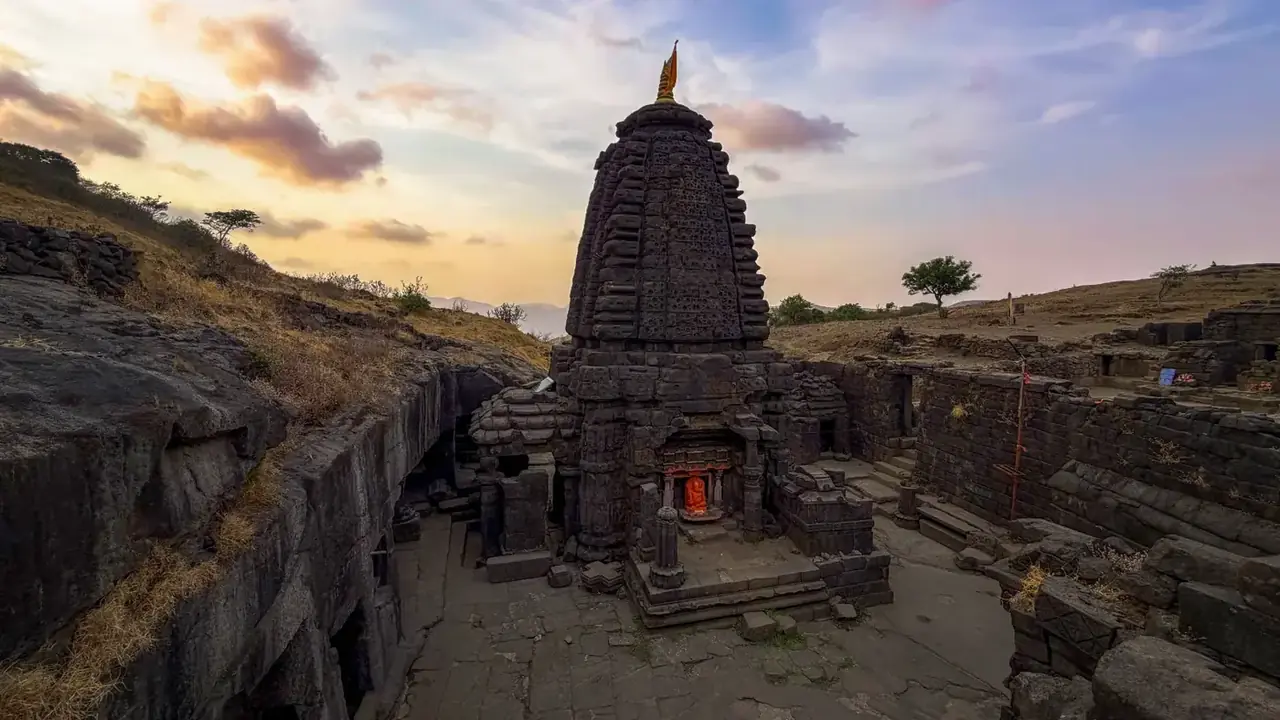
Harishchandragad is one of the oldest and most storied forts in the Sahyadri range, tucked away in Maharashtra's Ahmednagar district. It's not just a trek. It's a walk through history, past centuries-old caves, temples carved into rock, and a cliff that plays tricks with clouds and rainbows.
This guide covers every route, every temple, every practical detail you need, whether you're a first-time trekker or someone chasing the challenging Nalichi Vaat route for the thrill of it.
Table of Contents
- What is Harishchandragad and Why It's Famous
- Key Attractions on the Trek
- Harishchandragad Trekking Routes
- Best Time to Visit Harishchandragad
- How to Reach Harishchandragad
- Difficulty Level and Who Should Attempt It
- Practical Tips for First-Time Trekkers
- Common Mistakes to Avoid
- Expert Insights
- Frequently Asked Questions
What is Harishchandragad and Why It's Famous
Harishchandragad is a hill fort located in the Ahmednagar district of Maharashtra, standing at roughly 4,670 feet above sea level. It falls under the Kalsubai Harishchandragad Wildlife Sanctuary and is considered one of the crown jewels of Sahyadri fort treks.
What makes it different from most forts around Pune and Mumbai is the sheer variety packed into one trek. You get ancient caves, a Shiva temple with a linga surrounded by icy water, a lake once home to sacred idols, and a cliff so dramatic that it has its own set of natural phenomena named after it.
Historically, the fort's carvings and cave architecture are believed to trace back to the medieval period, with some structures linked to the Kalchuri Dynasty around the 6th century. The caves themselves are believed to have been carved out around the 11th century, and older references tie parts of the site back to the Microlithic age.
Key Attractions on the Trek
Kokan Kada: The Star of the Show
Kokan Kada is a massive, west-facing cliff that overlooks the Konkan region. It's famous for a rare optical phenomenon called a circular rainbow or broken spectre, which appears when mist sits in the valley below and sunlight hits it just right behind the viewer.
Trekkers also watch for vertical cloud bursts, a strange effect where low-lying clouds get pulled into pockets beneath the cliff and shoot upward more than 50 feet on windy days. The best time to catch the sunset here is from the right end of the cliff, while the left end offers stunning views of nearby waterfalls.
Saptatirtha Pushkarni
This small lake sits east of the Harishchandreshwar temple. It was once a source of drinking water and home to lakeside idols of gods like Vishnu. Those idols have since been relocated to nearby caves for protection, and unfortunately, years of littering have made the water undrinkable.
Kedareshwar Cave
One of the most photographed spots on the trek, Kedareshwar Cave houses a large Shiva Linga standing in waist-deep, ice-cold water. Originally supported by four pillars representing the four yugas (Satya, Treta, Dvapara, and Kali), only one pillar remains standing today. This cave is also the origin point of the Mangalganga river.
Caves on Harishchandragad
Scattered across the fort are natural caves that once served as shelter for trekkers during monsoon and winter treks. With more dhabas now offering camping and food services, fewer people rely on the caves, but they remain worth exploring for their history and scale.
Khireshwar Temple
Located near the Khireshwar route's starting point, this temple features a rare 1.5-meter sculpture of Lord Vishnu in a sleeping posture, known locally as Sheshshayi Vishnu. The temple's carvings and nearby caverns tie it to the Mahadev Koli tribe and medieval-era craftsmanship.
Taramati Peak
The fourth-highest peak in Maharashtra, Taramati (also called Taramanchi) sits on the Harishchandragad plateau and offers a panoramic view of the Naneghat region and Murbad below.
Pachnai Village
A small base village about 210 kilometers from Mumbai, Pachnai thrives on trekking tourism, with dhabas and homestays supporting the local economy. Visit post-monsoon for lush rice fields, pre-monsoon for firefly sightings, and during monsoon for nearby waterfalls.
Harishchandragad Trekking Routes
There are three primary routes up Harishchandragad, each with a very different personality.
| Route | Distance | Difficulty | Best For |
|---|---|---|---|
| Khireshwar | ~6.3 km total | Moderate to Hard | Experienced trekkers, popular from Pune |
| Pachnai | ~3 km | Easy | Beginners, solo trekkers |
| Walhivale/Belpada | ~6 km | Hard to Very Hard | Seasoned trekkers with climbing gear |
Route 1: Khireshwar (Popular from Pune)
This is the most scenic and most popular route, broken into three sections.
Part 1: Khireshwar to Forest Junction - Distance: 1.5 km - Time: 30 minutes - You'll cross paddy fields near Khireshwar village before entering the forest section.
Part 2: Forest Junction to Tolar Khind - Distance: 1.8 km - Time: 1 hour 30 minutes - The trail gets steeper here, with loose rocks. A tea stall at Tolar Khind is a good rest stop.
Part 3: Tolar Khind to the Pinnacle - Distance: 5 km - Time: 3 hours - This section includes a rocky patch tilted nearly 70 degrees, supported by poles and chains. Cross early in the morning since the metal gets hot in the afternoon sun.
Within this route, the Rajmarg Trail is a notoriously difficult and slippery alternative, recommended only for experienced trekkers.
Route 2: Pachnai (Easiest Option)
- Distance: 3 km
- Time: 2 hours
- Well-marked with metal ladders and railings, making it manageable for solo trekkers and beginners.
- After crossing a large rock wall about an hour in, you reach a plateau leading to the Harishchandra temple within another 20-25 minutes.
Route 3: Walhivale/Belpada (For Experienced Trekkers Only)
This route splits into three sub-paths: Makad Naal, Nalichi Vaat, and Sadhle Ghat, with combination routes also available through Bhailghat.
Nalichi Vaat, meaning "a passage through a gorge," is an 80-degree tilted rocky patch recommended only for trekkers with strong fitness levels and prior technical trekking experience.
Two-day itinerary via Belpada:
Day 1: Belpada Village to Kokankada - Distance: 6 km - Time: 9 hours - Starts early morning through a stream bed, followed by a steep rocky climb with a slippery patch extending up to 25 feet high.
Day 2: Descent to Khireshwar - Distance: 8 km - Time: 4 hours - Passes back through Tolar Khind toward Khireshwar village, where transport is easily available.
Best Time to Visit Harishchandragad
The ideal window for the Harishchandragad trek runs from August to February, when the landscape is green and the ancient water tanks look their best just after monsoon.
- August–September: Considered peak season, lush greenery, waterfalls at their fullest
- Post-monsoon (Oct–Dec): Clear skies, best visibility, comfortable temperatures
- Winter (Dec–Feb): Popular for the Harishchandragad night trek and Kokan Kada sunrise views
- Summer (Mar–May): Not recommended due to heat and water scarcity
- Peak monsoon (Jun–Jul): Extremely challenging, thick fog, poor visibility, and rough road conditions leading to the trailhead
How to Reach Harishchandragad
From Mumbai
- Take a local train to Kalyan station
- Board a bus heading toward Alephata, passing through Malshej Ghat
- Check if the bus continues to Khireshwar or Belpada
- Get off at Khubi Phata (for Khireshwar) or Belpada/Walhivale
Mumbai to Khireshwar is roughly 138 km, about a 4-hour drive.
For the Pachnai route from Mumbai: take a local train to Kasara, hire a jeep to Rajur, then catch a bus to Pachnai village.
From Pune
- Take a bus to Alephata
- Ask for connecting buses to Khubi Phata or Khireshwar
- For Belpada, get down at Sawarne village
This journey takes around 4.5 hours from Pune to either starting point.
For Pachnai from Pune: board a bus toward Mumbai or Nashik, get off at Ghoti village, then take another bus to Pachnai. Total travel time is close to 5 hours.
By Train
The nearest railway station is Igatpuri, about 41 km from the fort. From Igatpuri, you'll still need a train connection from Kalyan followed by road transport.
Difficulty Level and Who Should Attempt It
Harishchandragad is regularly listed among the most challenging treks in the Western Ghats, largely because of routes like Nalichi Vaat and the Rajmarg Trail, which involve rock climbing, rappelling, and valley crossings on steep slopes. If you'd rather start with something shorter, our Harihar Fort trek guide covers a similarly thrilling but more compact staircase climb.
Suitable for beginners: Pachnai route only
Suitable for intermediate trekkers: Khireshwar via Tolar Khind (with proper gear and guidance)
For experienced trekkers only: Walhivale/Belpada, Nalichi Vaat, Rajmarg Trail
If you're new to trekking, start with Pachnai and save the tougher routes for once you've built up stamina and technical skill. Our Sahyadri trekking safety checklist for beginners is a good place to start too.
Practical Tips
- Wear proper trekking shoes with strong grip; several patches are steep and rocky
- Carry trekking poles, especially for the Khireshwar route
- Cross metal-poled rocky sections early morning before they heat up
- Carry enough water and snacks, especially on the longer Khireshwar and Belpada routes
- Book camping or dhaba stays in advance during peak season (Aug–Feb)
- If night trekking, carry a reliable headlamp and extra batteries
- Respect the historic caves and temples; avoid touching carvings or idols
- Do not litter near Saptatirtha Pushkarni or anywhere on the trail
- Check weather conditions before attempting Kedareshwar Cave in monsoon, as river flow can block the path
Common Mistakes to Avoid
- Attempting Nalichi Vaat or Rajmarg Trail without experience — these routes have injured underprepared trekkers in the past
- Ignoring monsoon warnings — visibility drops sharply and paths become dangerously slippery
- Skipping proper footwear — sandals or worn-out shoes are a real risk on rocky, tilted patches
- Underestimating trek duration — the Belpada route alone can take a full 9 hours on day one
- Not checking transport timings back — buses to Mumbai and Pune from base villages aren't frequent
- Drinking from Saptatirtha Pushkarni — the water is no longer safe due to pollution
Expert Insights
Seasoned Sahyadri trekkers often point out that timing your arrival at Kokan Kada for sunset is worth planning your entire day around. Reaching the temple complex by early afternoon leaves enough buffer to explore the caves, have lunch, and still make it to the cliff edge before the light fades.
Another insight shared by regular trekkers: the Tolar Khind rock patch is far more manageable in the early morning hours, not just because of temperature, but because there's less foot traffic and better visibility on the chains and poles.
Locals in Pachnai and Khireshwar also recommend spending an extra day at the base village rather than rushing straight back after the descent. The waterfalls, rice fields, and firefly displays (pre-monsoon) around these villages are often overlooked but genuinely worth the extra time.
Frequently Asked Questions
1. How difficult is the Harishchandragad trek? It ranges from easy to very difficult depending on the route. Pachnai is considered easy, Khireshwar is moderate to hard, and Walhivale/Belpada with Nalichi Vaat is one of the toughest treks in the Sahyadris.
2. What is the best time to visit Harishchandragad? August to February is generally considered the best window, with post-monsoon months offering the clearest views and full water tanks.
3. How do I reach Harishchandragad from Mumbai? Take a local train to Kalyan, then a bus toward Alephata via Malshej Ghat, continuing to Khubi Phata or Belpada depending on your chosen route.
4. What is Kokan Kada famous for? Kokan Kada is a massive cliff known for rare circular rainbow sightings and vertical cloud burst phenomena, along with dramatic sunset and sunrise views.
5. Is Harishchandragad trek suitable for beginners? Yes, if you take the Pachnai route, which is shorter, well-marked, and considered the easiest way up the fort.
6. Can I do a night trek to Harishchandragad? Yes, night treks are popular, especially via the Khireshwar route during winter and summer, timed for sunrise views from Kokan Kada or Taramati Peak.
7. Are there caves to stay in during the trek? Yes, natural caves exist across the fort, though most trekkers now prefer dhabas and camping arrangements set up by locals.
8. How far is Harishchandragad from Pune? It's approximately 170 km south of Pune, taking around 4 to 4.5 hours by road depending on the route chosen.
The Harishchandragad trek isn't just another checkbox on a trekking bucket list. It's a layered experience: ancient temples, a cliff that plays with light and clouds, caves carved by hands centuries ago, and villages that still run on the rhythm of the seasons.
Whether you choose the beginner-friendly Pachnai route or take on the demanding Nalichi Vaat for bragging rights, Harishchandragad rewards every trekker willing to make the climb. Pick your season carefully, respect the terrain, and give yourself enough time to actually sit at Kokan Kada and watch the sun go down. That's the moment people come back for.
Ready for Your Next Adventure?
Don't just read about it — come experience it. Book your spot on the Harishchandragad Trek with certified trek leaders, small groups, and everything organised for you.
See upcoming dates, the detailed itinerary and pricing for the Harishchandragad Trek with Mumbai Trekizens.
View trek & dates → All upcoming treks →🏷 Harishchandragad trek, Harishchandragad fort, Kokan Kada, Harishchandragad trek from Pune
Be the first to comment on this post.