Introduction
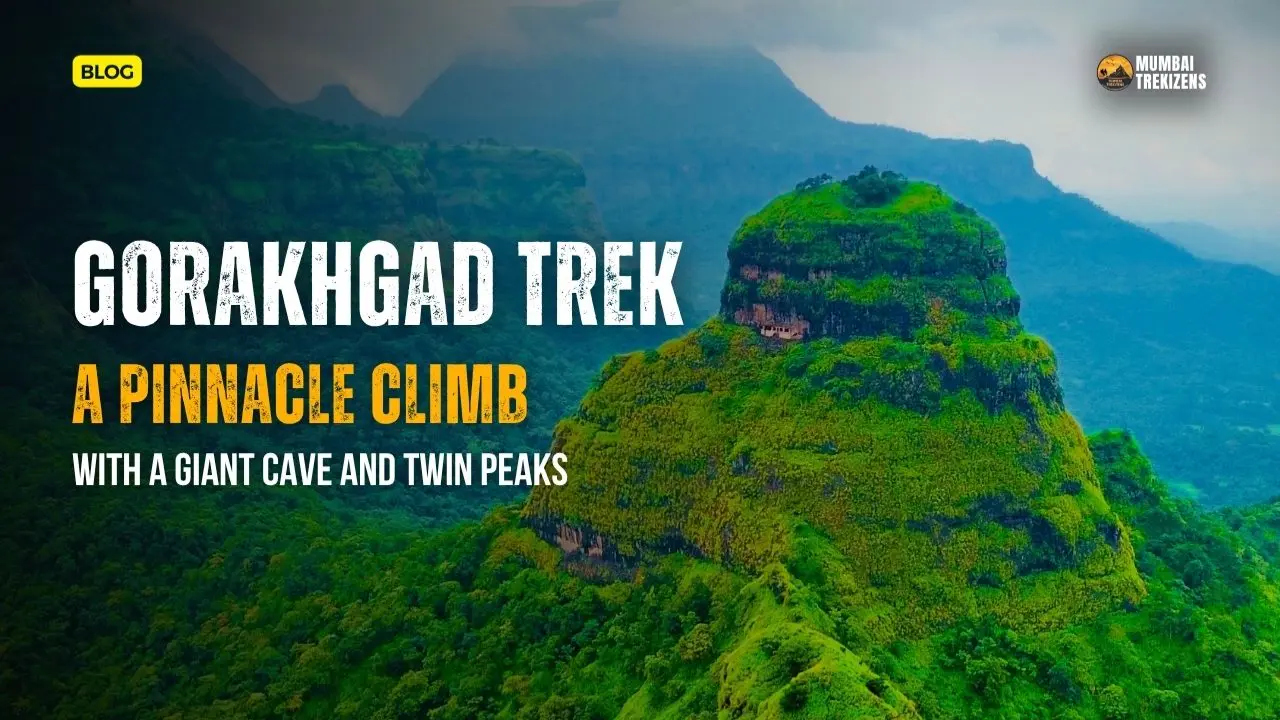
For trekkers ready to graduate from easy forts to something more thrilling, the Gorakhgad trek is a perfect step up. This slender pinnacle fort near Murbad rewards you with rock-cut steps, a nearly vertical rock patch near the top, a giant cave big enough to sleep in, and dramatic views of its twin peak, Machhindragad, rising right alongside.
Set amid thick forest near Dehri village, Gorakhgad blends adventure and serenity. The climb starts gently, builds steadily, and finishes with an exciting scramble to a tiny summit temple, an achievement that feels genuinely earned.
This guide covers the route from Dehri village, the rock patch, the famous cave, difficulty, the twin-peak setting, food, transport, and the safety tips that make this pinnacle climb both exhilarating and secure.
Table of Contents
- Where Gorakhgad Is Located
- About Gorakhgad and Machhindragad
- The Giant Cave
- The Rock Patch and Pinnacle Climb
- The Trek Route From Dehri Village
- Difficulty Level and Who It Suits
- Cave Stay and Camping
- How to Reach Gorakhgad
- Best Time to Visit
- Food, Water, and Facilities
- Safety Tips
- Practical Tips
- Common Mistakes
- Expert Insights
- Frequently Asked Questions
- Ready for Your Next Adventure?
Where Gorakhgad Is Located
Gorakhgad is a pinnacle fort near Dehri village, close to Murbad in Thane district, Maharashtra, set amid thick forest in the Sahyadri range. It sits alongside its twin peak, Machhindragad, and the two rise together over the surrounding trail.
The fort is well within reach of Mumbai and Pune, with Kalyan being a common railway access point. The trek starts from the temple at the road-head as you go from Dehri toward Murbad.
Its forested setting and slender pinnacle shape make Gorakhgad a striking sight from the base, and a rewarding, adventurous climb once you're on it.
About Gorakhgad and Machhindragad
Gorakhgad and its neighbor Machhindragad are named after the revered yogis Gorakhnath and Machhindranath (Matsyendranath), figures deeply important in the Nath spiritual tradition. This gives the fort a serene, spiritual character alongside its adventurous climb.
Historically, Gorakhgad served as a watchpost guarding the trade route through the region, rather than a large military fort. Its value lay in its position and views rather than grand fortifications.
Today the twin peaks stand side by side, providing what many describe as a surreal setting. Machhindragad is the tougher of the two to climb and is usually admired from Gorakhgad rather than summited casually, while Gorakhgad itself is the main trekking objective.
The Giant Cave
One of Gorakhgad's most beloved features is its enormous cave at the base of the summit pinnacle. This spacious rock-cut cave is said to be able to accommodate around 30 people at a time.
The cave is a wonderful place to rest, shelter from sun or rain, and take in the surroundings before the final climb. It's also a popular spot for overnight stays, giving adventurous trekkers a chance to sleep on the fort under the stars (well, under the rock).
There's a small temple presence associated with the site, and the cave area has a peaceful, almost meditative feel, fitting for a fort named after great yogis. Reaching this cave, then looking up at the near-vertical pinnacle above, is one of the trek's memorable moments.
The Rock Patch and Pinnacle Climb
Gorakhgad's signature challenge is the rock patch near the top. The climb is easy at the beginning, becomes steeper gradually, and towards the end you maneuver across an almost vertical patch to reach the peak.
What to know about the climb:
- Early rock patch: A short distance from the base, there's a rock patch (around 65 degrees) that looks harder than it is.
- Rock-cut steps: Much of the ascent uses steps carved into the rock, aiding the climb.
- The final pinnacle: The last section to the tiny summit temple involves a steep, near-vertical rock patch that demands care, steady hands, and a clear head.
- The summit: A small temple crowns the pinnacle, with 360-degree views including Machhindragad right beside you.
The final scramble is the thrilling heart of the trek. It's exposed and steep, so it rewards confidence and care, and it's exactly where a rope for support and an experienced hand make the climb both safer and more enjoyable, especially for those newer to pinnacle scrambles. If you enjoy exposed rock-cut climbs like this, the Kalavantin Durg trek takes the thrill even higher.
The Trek Route From Dehri Village
The trek begins at the temple at the road-head near Dehri village.
What the route is like:
- The start: From Dehri, a plain walk and gentle forest trail ease you into the climb (roughly 1.5 hours from Dehri to the base of the pinnacle).
- Steady ascent: The path climbs through forest, plateauing out a couple of times, passing the early rock patch.
- The cave: You reach the giant cave at the base of the summit pinnacle, a natural rest and regroup point.
- The pinnacle: The final steep rock patch and rock-cut steps lead to the tiny summit temple.
Total time: The full trek can be done in about 4 to 5 hours round trip, depending on pace and time spent at the cave and summit.
The route's gradual build, from easy walk to genuine scramble, is part of what makes Gorakhgad such a satisfying trek. It eases you in and then delivers a real adventure at the top. The forest approach can be confusing in low light, so brush up on navigation tips for Sahyadri fort treks beforehand.
Difficulty Level and Who It Suits
The Gorakhgad trek is rated moderate to difficult, mainly because of the final near-vertical rock patch.
- Suitable for: trekkers with basic to moderate fitness who are comfortable with some free rock climbing and exposure at the top.
- Needs care: the steep summit rock patch, which is exposed and requires steady climbing, and slippery rock in monsoon.
- Less ideal for: absolute beginners going alone, young children, or those very uneasy with heights on the final pinnacle.
The bulk of the trek is a manageable forest climb; it's the final pinnacle scramble that raises the grade. For those newer to such climbs, doing Gorakhgad with an experienced group (who can provide rope support and guidance on the rock patch) makes it both safe and hugely rewarding.
Cave Stay and Camping
Gorakhgad's giant cave makes it a favorite for an adventurous overnight stay.
Why stay overnight:
- The cave shelters around 30 people, offering natural protection from the elements.
- Sunrise and sunset from the fort area are beautiful, with Machhindragad alongside.
- Star-filled skies away from city lights make for magical nights.
- A peaceful, spiritual atmosphere fitting the fort's Nath heritage.
If you plan a cave stay:
- Carry proper bedding, warm layers, water, food, and a reliable headlamp.
- Practice Leave No Trace; carry out everything.
- Be prepared for basic, wild conditions, this is a cave, not a campsite with facilities.
An overnight in the Gorakhgad cave is a genuine adventure and one of the trek's most memorable options. Organized overnight treks handle the food, safety, and logistics, which makes the experience smooth for those new to caving-style stays.
How to Reach Gorakhgad
By Train
- Kalyan is a common railway access point. From Kalyan, travel by road toward Murbad and then to Dehri village, the trek base.
From Mumbai
- Reach Kalyan by train, then road to Murbad and Dehri (roughly 3 to 4 hours total depending on transport).
From Pune
- By road toward Murbad via the appropriate route (roughly 4 to 5 hours).
Base Village
- Dehri village near Murbad is the trek base, with the trail starting at the road-head temple.
Note: Public transport from Murbad to Dehri can be limited, so many trekkers arrange a vehicle or go with an organized group. Confirm return transport in advance, especially for an overnight cave stay.
Best Time to Visit
- Monsoon (June to September): Beautiful and green, with a lush forest and misty pinnacle. However, the rock patch and steps get very slippery, so the final climb needs extra caution, or is best done with experienced support.
- Post-monsoon and winter (October to February): The best window for most trekkers, green-to-golden, comfortable, with safer, drier rock on the crucial pinnacle section.
- Summer (March to May): Doable but hot on the exposed upper section; start early and carry plenty of water.
For the safest and most comfortable pinnacle climb, post-monsoon and winter are ideal. Monsoon offers beauty but makes the exposed final rock patch genuinely slippery, so care and guidance matter most then.
Food, Water, and Facilities
Food and water: There are usually small stalls near Dehri village for basic snacks and tea, and occasionally simple refreshments on the trail during peak season, but don't rely on these. Carry your own water (2 to 3 liters) and food, especially for a cave stay.
Facilities: Gorakhgad is a wild pinnacle fort with minimal facilities. The cave provides shelter but nothing more. Come fully self-sufficient, and carry out all your trash to keep the forested setting pristine.
Simple village food, like bhakri and pithla, is often available in Dehri before or after the trek, a warm reward after the climb.
Safety Tips
- Wear trekking shoes with excellent grip for the rock patch and rock-cut steps.
- Take the final pinnacle scramble slowly, with steady hands and a clear head.
- Use rope support on the steep patch if you're not confident; go with experienced climbers.
- Avoid the exposed pinnacle in heavy monsoon rain, when the rock is slick.
- Carry 2 to 3 liters of water and food; the fort has little available.
- For a cave stay, carry warm layers, bedding, and a headlamp.
- Check the weather and be cautious on the exposed top in thunderstorms.
- Start early to complete the climb and descent (or set up camp) in good light.
The final rock patch is the key safety point. It's exposed and near-vertical, so it's exactly where the guidance, rope support, and experience of an organized group make the biggest difference, particularly for those newer to pinnacle climbs.
Practical Tips
- Do a cave stay for the full Gorakhgad experience, if you're prepared.
- Attempt the pinnacle in dry conditions for the safest climb.
- Admire Machhindragad from Gorakhgad rather than attempting it casually.
- Carry cash for the village and transport.
- Grippy shoes are essential for the rock patch.
- Carry a headlamp for early starts or cave stays.
- Quick-dry clothing beats cotton in monsoon.
- Leave no trace, especially in and around the cave.
Common Mistakes
- Attempting the steep pinnacle in worn shoes or in slippery monsoon conditions.
- Climbing the final rock patch without confidence or support, rather than going with experienced climbers.
- Trying to summit Machhindragad casually, which is genuinely tougher and riskier.
- Not carrying enough water and food, assuming the fort has supplies.
- Doing a cave stay unprepared, without warm layers or a headlamp.
- Starting late and rushing the exposed climb or descent.
- Venturing onto the exposed pinnacle in a thunderstorm.
- Littering in and around the cave and forest.
Expert Insights
Trek leaders often recommend Gorakhgad as the ideal introduction to pinnacle climbing. The forest approach eases everyone in, the giant cave offers a memorable rest and stay option, and the final rock patch delivers a genuine, exposed scramble, all without being a full technical expedition. It builds confidence beautifully.
Their key emphasis is on that final pinnacle. The scramble is exposed and near-vertical, and while it's very doable with care, it's not the place for hesitation or poor footwear. This is where they provide rope support and coaching, especially for newer trekkers, turning a potentially nerve-wracking moment into an exhilarating triumph.
Their favorite recommendation is the cave stay. Sleeping in a cave large enough for 30 people, on a fort named after revered yogis, with Machhindragad silhouetted against the stars, is a uniquely peaceful adventure. Done with an organized group that handles food, safety, and the climb, it's one of the most rewarding overnight experiences in the region.
Frequently Asked Questions
1. How difficult is the Gorakhgad trek? It's rated moderate to difficult. Most of the climb is a manageable forest ascent, but the final near-vertical rock patch to the summit is exposed and needs careful, confident climbing, ideally with support for beginners.
2. What is special about the Gorakhgad cave? Gorakhgad has a large cave at the base of the summit pinnacle that can shelter around 30 people. It's a great rest spot and a popular place for an adventurous overnight cave stay under the stars.
3. What is the rock patch on the Gorakhgad trek? Near the top, the trail crosses an almost vertical rock patch to reach the tiny summit temple. There's also an easier rock patch (around 65 degrees) early on. Grippy shoes and steady climbing are essential.
4. How do I reach Gorakhgad? Kalyan is a common railway access point. From there, travel by road toward Murbad and then to Dehri village, the trek base. From Mumbai it's roughly 3 to 4 hours total. Local transport to Dehri can be limited.
5. Can you stay overnight on Gorakhgad? Yes. The giant cave is a popular spot for an overnight stay. Carry proper bedding, warm layers, water, food, and a headlamp, and practice Leave No Trace, as the cave offers shelter but no facilities.
6. What is the best time for the Gorakhgad trek? Post-monsoon and winter (October to February) are best, with safer, drier rock on the crucial pinnacle. Monsoon is beautiful and green but makes the exposed final climb slippery, so extra caution is needed.
7. What are Gorakhgad and Machhindragad named after? They're named after the revered yogis Gorakhnath and Machhindranath (Matsyendranath) of the Nath tradition. Gorakhgad is the main trekking peak, while the tougher Machhindragad is usually admired from alongside.
The Gorakhgad trek is a small pinnacle with a big adventure: a gentle forest climb that builds to a thrilling near-vertical scramble, a giant cave you can sleep in, and stunning views of its twin peak Machhindragad. Named after great yogis, it blends serenity and excitement in a way few treks manage.
Climb in the dry season for the safest footing on the pinnacle, wear grippy shoes, take the final rock patch with care (and support if you're new to it), and consider a cave stay for the full experience. Gorakhgad rewards the prepared trekker with one of the most satisfying pinnacle climbs in the Sahyadri.
Ready for Your Next Adventure?
Don't just read about it — come experience it. Book your spot on Sahyadri Treks with certified trek leaders, small groups, and everything organised for you.
🏷 Gorakhgad Dehri village route, Gorakhgad cave stay, Gorakhgad Machhindragad twin peaks, Gorakhgad rock patch, Murbad trek, Gorakhgad trek route from Dehri village
Be the first to comment on this post.